
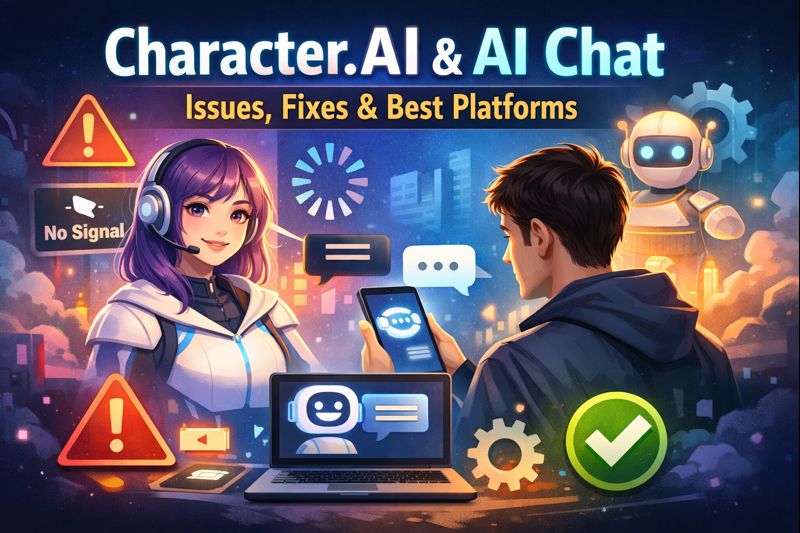
Artificial intelligence has evolved beyond simple question-and-answer systems and has entered a phase where interaction feels more human and engaging. One of the most noticeable developments in this area is the rise of character-based AI conversations. These systems allow users to communicate with virtual personalities that behave like fictional or human-like characters rather than basic automated assistants. Because of this, many people now use these platforms for storytelling, roleplay, entertainment, and casual conversation.
This article explains how character-based AI conversations work, why platforms like Character.AI have become popular, what problems users are currently facing, how those problems can be handled, and which alternatives are available today. The explanation is simple, direct, and written in a clear paragraph style.
Table of Contents
Meaning of Character-Based AI Conversations
Character-based AI conversations refer to interactions where artificial intelligence is designed to act like a specific personality instead of a general-purpose assistant. These virtual personalities may represent fictional characters, historical figures, emotional companions, or entirely original creations. Each personality follows a specific behavior pattern, tone, and conversational style.
Unlike standard chatbots that focus on accuracy and information, these systems focus on expression and continuity. As a result, conversations feel more personal and immersive. This approach makes users feel as if they are interacting with a character rather than a machine.
Overview of Character.AI as a Platform
Character.AI is one of the most widely used platforms in this space. It allows users to talk with pre-created personalities or design their own from scratch. Each created personality can have a background story, emotional traits, and conversational habits.
The platform follows a simple principle: user input shapes the experience. This means the quality and direction of the interaction depend largely on how the user communicates. Over time, conversations can become detailed and layered, making them suitable for long-term engagement.
The service is available through web browsers and mobile applications, which has helped it reach a global audience.
How These AI Conversations Function
The working process behind these systems is straightforward. First, the user sends a message. The system then analyzes the message for meaning, tone, and intent. Based on this analysis, it generates a response that aligns with the character’s personality and previous conversation history.
With repeated interaction, the system adapts to the user’s communication style. This adaptive behavior allows conversations to flow naturally rather than feeling disconnected. Because memory plays a role, interactions feel continuous instead of repetitive.
This design is what separates character-driven conversations from ordinary automated replies.
Why These Systems Feel More Human
One reason these platforms feel more human is their focus on personality instead of productivity. Instead of giving direct answers, the system responds emotionally, narratively, or conversationally. It may ask questions, express opinions, or continue a story.
This makes the experience engaging and enjoyable. Many users use these systems not to solve problems but to relax, imagine scenarios, or explore creative ideas. As a result, these platforms are often used for entertainment rather than work.
Popular Platforms Offering Character-Based Conversations
Several platforms offer this type of experience today.
Character.AI is known for detailed personalities and long memory-based conversations, though it requires user registration and follows strict safety policies.
Talkie AI focuses more on emotional interaction and companionship-style conversations. It is designed for casual engagement rather than complex storytelling.
PolyBuzz provides a more open environment with fewer restrictions and a large collection of creative and anime-inspired personalities.
Perchance offers a simple browser-based experience without requiring account creation, making it accessible for beginners.
Talefy emphasizes narrative-driven interactions, while DeepAI provides simpler conversational experiments with limited memory.
Each platform serves a different type of user and purpose.
Common Issues Users Are Facing
Many users report that conversations sometimes stop unexpectedly. Messages may fail to load, responses may take too long, or conversations may freeze. In some cases, the system may forget previous context, which disrupts the experience.
These problems are not limited to a single device or browser and are often reported by users worldwide.
Reasons Behind These Problems
One major reason is heavy usage. When too many users access the platform at the same time, servers may struggle to keep up. This leads to delays or unresponsive conversations.
Another reason is ongoing system updates. Platforms regularly adjust features and policies, which can temporarily affect performance. Safety moderation systems may also interrupt responses if certain rules are triggered.
Additionally, local issues such as outdated browsers, corrupted cache data, or interfering extensions can cause technical problems.
Practical Ways to Resolve Errors
Users can try several simple steps to resolve common issues. Reloading the page or restarting the application can fix temporary glitches. Clearing browser data often removes stored conflicts. Switching to another browser or device may also help.
Disabling VPNs and browser extensions can improve performance. Using private browsing mode reduces interference from stored settings. Keeping applications and browsers updated ensures better compatibility.
If these steps do not work, the issue is likely related to the platform’s infrastructure and will resolve with time.
Age Restrictions and Policy Changes
Recently, stricter age-related rules have been introduced on major platforms. Users under a certain age now face limitations on interaction. In some cases, they are restricted from initiating new conversations and can only view older chats.
These changes were implemented due to safety, legal, and ethical concerns. Authorities raised issues related to emotional dependence, inappropriate content exposure, and psychological well-being. To comply with regulations, platforms adjusted their policies accordingly.
Legal Status of Conversational AI Platforms
Conversational AI platforms are legal to operate. However, they must follow content moderation standards, protect younger users, and comply with regional laws. This is why many platforms introduce filters, monitoring systems, and usage limits.
While these safeguards may reduce creative freedom, they are essential for responsible operation.
Broader Challenges in This Technology
Beyond individual platform issues, the entire industry faces challenges. Supporting millions of users simultaneously requires advanced infrastructure. Maintaining character consistency over long conversations is technically demanding.
There is also the challenge of balancing realism with responsibility. As systems become more human-like, developers must ensure they do not encourage unhealthy emotional reliance.
These challenges highlight that the technology is still developing.
Choosing the Right Platform
The best platform depends on user intent. Those interested in detailed personalities and long conversations may prefer more advanced platforms. Users who want instant, casual access may choose simpler browser-based tools. Others may prefer open environments with fewer restrictions or story-focused systems.
Understanding personal goals helps in selecting the most suitable option.
Future Direction of Character-Based AI
The future of character-driven AI interaction looks promising. Improvements in memory handling, response speed, and conversational depth are expected. Developers are also working on safety systems that maintain user freedom without compromising responsibility.
As these systems mature, they are likely to become more reliable and widely accepted.
Conclusion
Character-based AI conversation platforms have introduced a new way for people to interact with artificial intelligence. Instead of focusing on tasks, they focus on personality, creativity, and engagement. Although users currently face technical issues and policy-related limitations, these challenges are largely due to system scale and regulatory requirements rather than flaws in the concept itself.
As technology continues to improve, these platforms are expected to become more stable, expressive, and useful for a wide range of users.
What’s wrong with it right now?
The platform is facing heavy usage, which can slow down or stop replies. This usually happens during peak hours or system updates.
What problem is it currently having?
Most issues are related to servers, safety filters, and frequent changes meant to improve user protection.
Why are bots not replying?
Replies may stop because of traffic overload, blocked messages, or temporary technical glitches.
How can chat errors be fixed?
Refreshing the page, clearing cache, or switching browsers often helps. If not, waiting is the best option.
Is it restricted for younger users?
Yes, younger users now have limited access due to safety rules.
AI chatbots are changing the way we communicate, but they also come with risks. Learn more about real-world consequences in my full coverage of the Character.AI teen death lawsuit.


Превосходная работа, всего недавно анализировал по схожему направлению.
Thank you for your kind words. I’m glad the article resonated with your recent analysis.